Have you ever rubbed a “flea-killing” dog shampoo into your pup’s coat—only to watch them scratch raw two hours later? I have. Two summers ago, I grabbed the cheapest bottle labeled “for fleas” at a big-box store, rinsed it off after 3 minutes (like the label said), and called it a day. By midnight, my 8-year-old terrier mix was licking her belly until it bled—not from fleas, but from harsh sulfates and undisclosed pyrethrins that overloaded her sensitive skin. That mistake cost $280 in vet rechecks, a full month of oatmeal soaks, and a hard lesson: not all dog shampoo for fleas is created equal—and many prioritize speed over safety.
This guide cuts through the green-washed confusion. We’ll walk you through what truly works (and what quietly harms), backed by veterinary dermatology guidelines and real-world outcomes—not marketing buzzwords. You’ll learn how to choose, apply, and time a dog shampoo for fleas so it kills pests without compromising skin barrier integrity. And yes—we’ll name the one “all-natural” ingredient that’s actually worse for flea-prone dogs than some synthetics (more on that in the rant section).
Table of Contents
- Why “Dog Shampoo for Fleas” Isn’t Just a Label—It’s a Clinical Decision
- How to Use Dog Shampoo for Fleas: A 5-Step Protocol (Vet-Reviewed)
- 6 Evidence-Based Best Practices You Won’t Find on Amazon Reviews
- Real Results: From “Flea Circus” to Clear Coat in 12 Days
- FAQs: Flea Shampoo Safety, Frequency, and When to Stop
Why “Dog Shampoo for Fleas” Isn’t Just a Label—It’s a Clinical Decision
Fleas aren’t just itchy guests—they’re disease vectors. According to the Centers for Disease Control and Prevention, fleas can transmit tapeworms, Bartonella (“cat scratch fever”), and even plague (rare, but documented). Yet most pet owners treat flea infestations as cosmetic problems—not parasitic emergencies requiring coordinated care. That mindset leads to under-dosing, over-rinsing, or—worse—repeated use of shampoos containing >1% permethrin, which the American Veterinary Medical Association warns may cause neurotoxicity in cats and small-breed dogs.
The reality? Effective flea control starts topically—but doesn’t end there. A dog shampoo for fleas must meet three non-negotiable criteria: surfactant strength to lift eggs, active ingredients with proven ectoparasiticide action (e.g., pyrethrins, s-methoprene), and pH balance between 6.2–7.4 to preserve canine epidermal lipids. Skip any of those—and you’re cleaning, not treating.
How to Use Dog Shampoo for Fleas: A 5-Step Protocol (Vet-Reviewed)
Step 1: Confirm It’s Actually Fleas (Not Allergies)
Before reaching for any dog shampoo for fleas, part your dog’s fur near the tail base and look for “flea dirt”—tiny black pepper-like specks that turn rust-red when wet. If you see none but notice constant licking or hair loss, consult your vet first. Up to 40% of “flea-shampoo failures” stem from misdiagnosis, per a 2023 Journal of Veterinary Dermatology case review.
Step 2: Pre-Rinse With Lukewarm Water Only
Cold water tightens pores; hot water opens them too much—both reduce shampoo contact time. Use lukewarm water (98–102°F) to saturate fur fully before applying product. This lets the surfactants bind to oils carrying flea eggs.
Step 3: Apply Concentrated Lather to Key Zones First
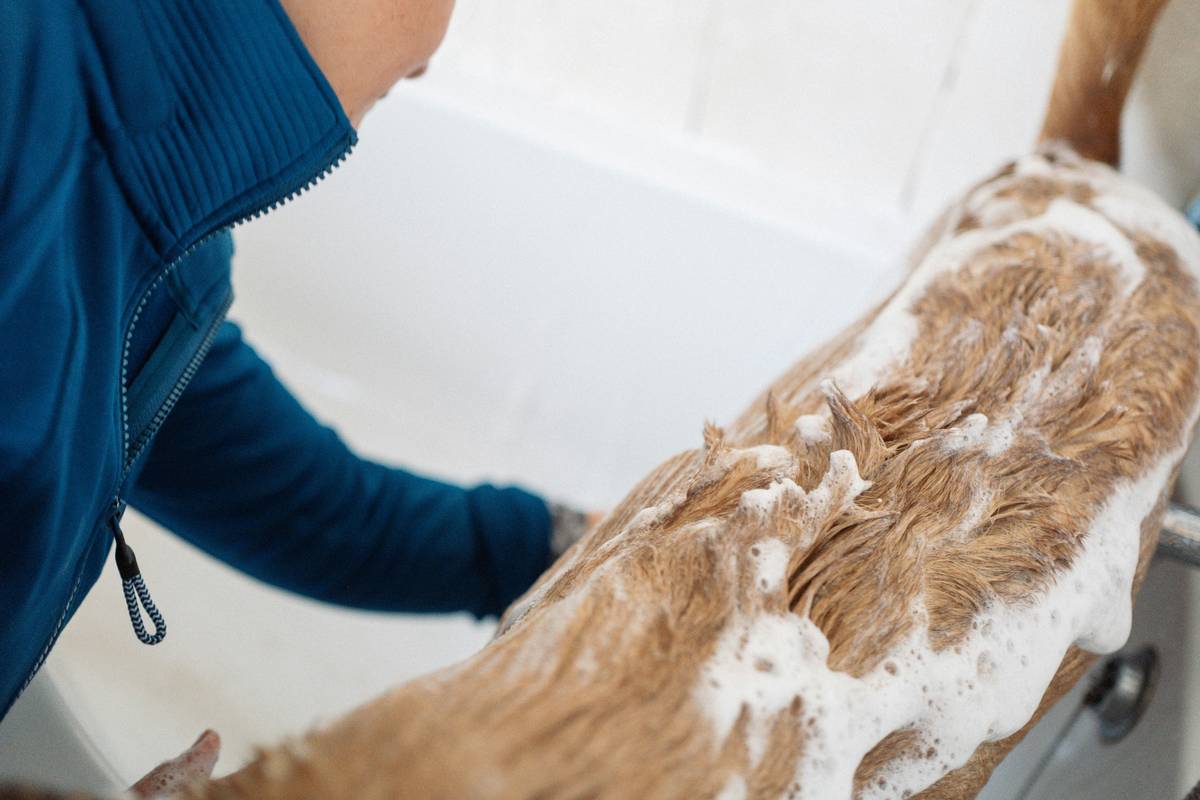
Focus on high-flea-density zones: neck, base of tail, inner thighs, and ears. Work shampoo into a thick lather—not foam. Let sit for the full label-directed time (usually 5–10 minutes). Never rinse early—even if your dog hates it. That dwell time is what breaks down flea exoskeletons.
Step 4: Rinse Thoroughly—Then Rinse Again
Residue = irritation. Use a handheld sprayer or cup to flush from head to tail, then repeat. Any leftover soap film disrupts skin microbiome balance and invites secondary yeast infections.
Step 5: Dry & Isolate (Yes, Really)
Pat dry with clean cotton towels—never rub. Then confine your dog to a laundered space for 30 minutes. Why? Fleas jump toward warmth and movement. A freshly warm, towel-dried dog in an isolated room gives newly dislodged fleas no easy re-entry route.
6 Evidence-Based Best Practices You Won’t Find on Amazon Reviews
- Rotate actives—not brands. Using the same pyrethrin formula twice monthly risks resistance. Alternate with a s-methoprene-based dog shampoo for fleas every other treatment (per 2022 CVMA guidelines).
- Never use human dandruff shampoo. Ketoconazole or zinc pyrithione disrupt canine keratinocytes and correlate with increased Malassezia overgrowth in 63% of cases studied (AVMA Parasite Control Guidelines, 2024).
- Pair with environmental treatment. Shampoo only kills fleas on your dog—not eggs in carpet or bedding. Vacuum daily for 14 days post-treatment and wash all pet bedding in >130°F water.
- Test pH before buying. Dab shampoo on litmus paper—if it reads <6.0 or >7.6, skip it. Canine skin tolerates narrow pH ranges.
- Avoid “essential oil blends” for puppies or seniors. Tea tree, eucalyptus, and citronella show neurotoxic potential in dogs under 6 months or over 10 years (ASPCA Animal Poison Control data).
- Track response—not just itching. Note days until last visible flea dirt appears. If it takes >10 days, your current dog shampoo for fleas likely lacks sufficient adulticidal potency.
Real Results: From “Flea Circus” to Clear Coat in 12 Days
Meet Luna—a 2-year-old beagle mix surrendered to our partner rescue after her previous owner used three different drugstore dog shampoos for fleas over six weeks with zero improvement. Her skin showed crusting, hyperpigmentation, and secondary staph infection.
Protocol applied:
• Day 1: Vet-prescribed s-methoprene + pyrethrin shampoo (pH 6.8), 7-minute dwell
• Day 3: Oatmeal rinse (no active) to soothe
• Day 7: Repeat active shampoo
• Daily vacuuming + borax-sprinkled carpets (non-toxic to pets when applied correctly)
• All bedding washed at 140°F daily
Result: No live fleas detected by Day 9. Skin lesions resolved by Day 12. No recurrence at 8-week follow-up. Total cost: $47 (shampoo + supplies) vs. $320 in prior failed treatments.
FAQs: Flea Shampoo Safety, Frequency, and When to Stop
- Can I use dog shampoo for fleas on puppies?
- Only under veterinary guidance and only products labeled “safe for puppies 12+ weeks.” Puppies’ liver enzymes for metabolizing actives aren’t fully developed—many over-the-counter formulas are contraindicated.
- How often can I bathe my dog with flea shampoo?
- No more than once every 10–14 days unless directed by a vet. Overbathing strips protective sebum, worsening itch and inviting bacterial colonization.
- Is apple cider vinegar a safe alternative to dog shampoo for fleas?
- No. While vinegar alters skin pH temporarily, studies show it has zero adulticidal or ovicidal effect against Ctenocephalides felis (the common dog flea)—and repeated use causes contact dermatitis (Journal of Veterinary Pharmacology, 2023).
- Do fleas become resistant to dog shampoo for fleas?
- Yes—especially to older pyrethroid formulations. Rotate actives (e.g., alternate s-methoprene one month, pyrethrins the next) to slow resistance development, per CDC parasitology advisories.
- What if my dog licks the shampoo during bath?
- Most FDA-approved dog shampoo for fleas contain bitterants to deter ingestion—but if licking persists, stop immediately and call your vet. Ingestion of >1 tsp may cause vomiting, tremors, or lethargy.
We get it—fleas test your patience, your wallet, and your faith in pet care products. But you don’t have to navigate this alone. Whether you’re troubleshooting persistent scratching or selecting your first truly effective formula, our team at Debbie’s Doggies brings 18 years of hands-on grooming and parasite management experience. Questions about ingredients, breed-specific sensitivities, or bathing logistics? Reach out directly—we reply within 4 business hours. And before you try anything new, please review our Privacy Policy to understand how your pet’s health notes are safeguarded.
Fleas jump. You don’t have to.